Particle Concentration
Light scattering is an effective means of determining particle concentration (number if particles per mL) and quantitative particle size distributions. A…
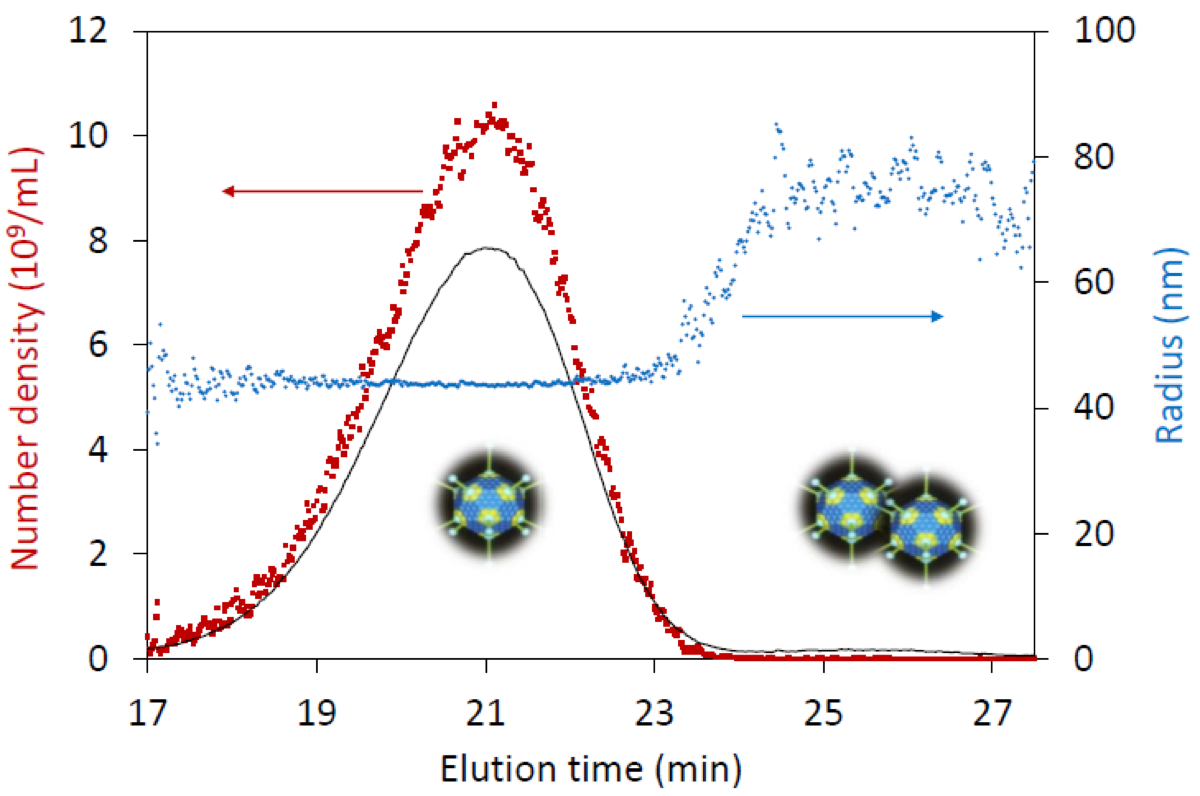
Light scattering is an effective means of determining particle concentration (number if particles per mL) and quantitative particle size distributions. A relatively simple, quick and effective option for doing so is batch DLS in combination with single-angle static light scattering (SLS); this technique is most reliable when the sample comprises primarily one or two populations with distinct sizes, and the particle radius is no more than about 160 – 225 nm. NanoStar, ZetaStar and the DynaPro Plate Reader are capable of determining particle concentrations in this way.
A much more reliable and versatile method of determining particle concentration is FFF-MALS, which combines a size-based separation step with MALS detection and analysis. With knowledge of the refractive index of the particle material, MALS determines the numbers of nanoparticles in solution for each eluting size fraction. FFF-MALS analyzes the concentration and quantitative size distributions of viruses, liposomes, lipid nanoparticles, latex beads, extracellular vesicles and other nanoparticles with results similar to TEM counting to within a few percent. Particle concentration by FFF-MALS compares favorably with particle tracking analysis, covering a larger size range and without the need for careful dilution to within a narrow concentration range.