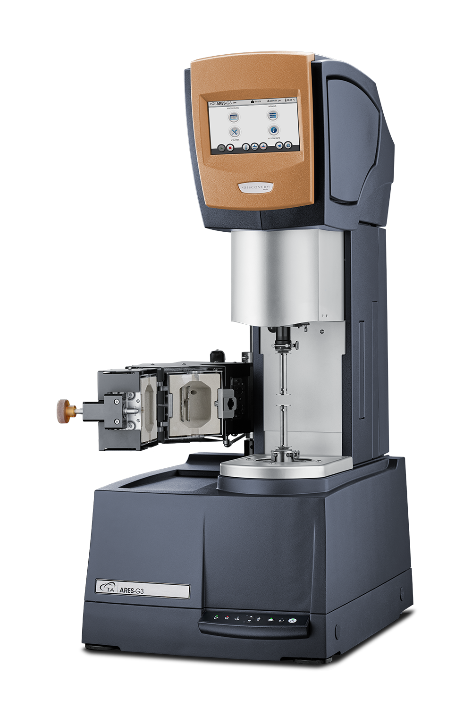
Rheometers
TA Instruments | Waters Corporation offers the most advanced rheometers on the market, engineered for superior accuracy, versatility, ease of use, and performance. With more than 40 years of experience in rheology, over 10,000 active rheometer installations worldwide, and 113,000+ scholarly publications, TA Instruments provides best-in-class support for its customers. Our strong global network includes dedicated applications and service teams, ensuring unparalleled expertise and assistance for researchers and industry professionals.
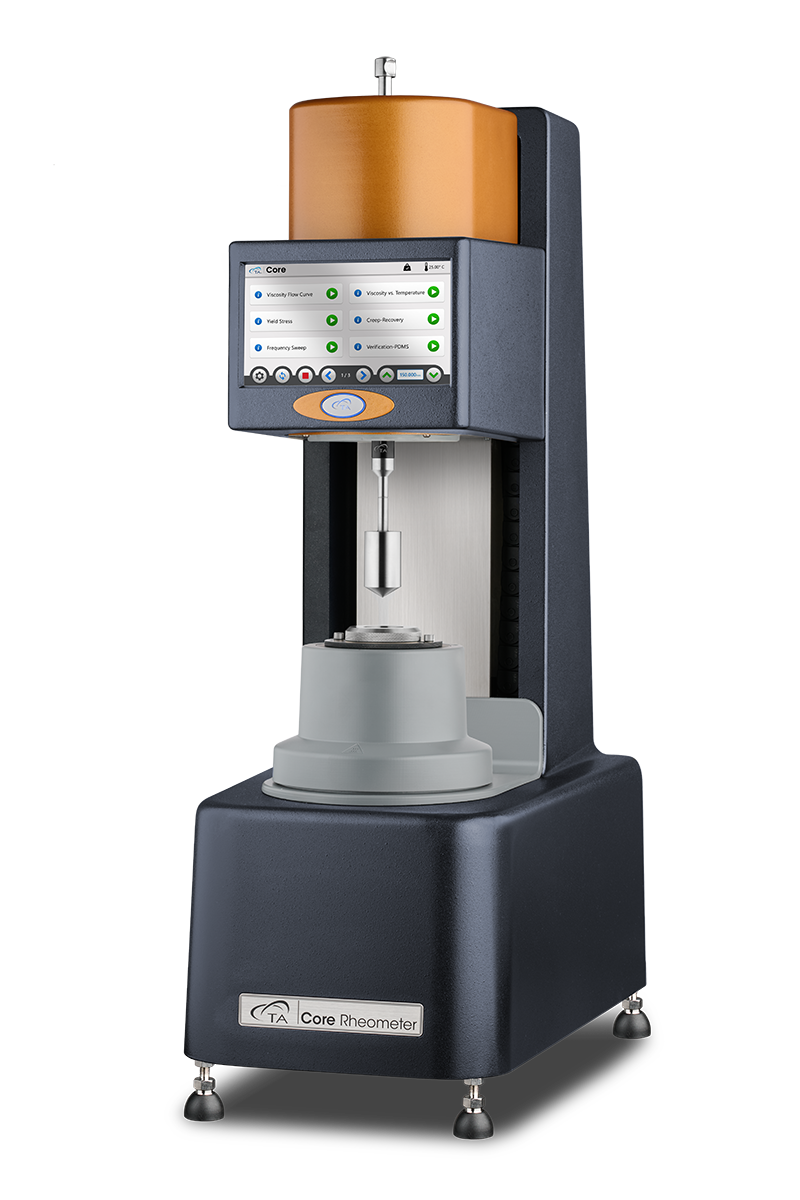
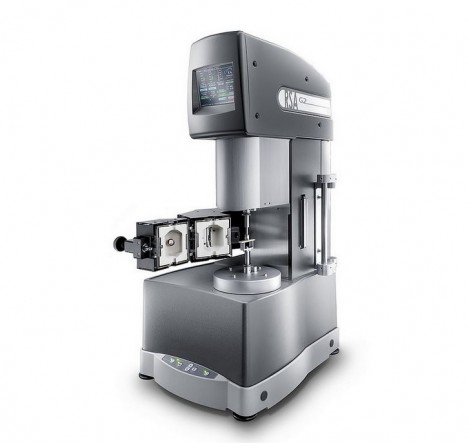
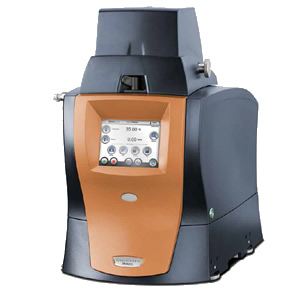
Explore our full lineup of rheometers, including the Discovery Core Rheometer, Discovery Hybrid Rheometer (DHR) Series, and ARES-G3 Rheometer, each designed to deliver unmatched accuracy and performance for rheological analysis.
Discovery Core Rheometer (DCR)
1 productsDiscovery Hybrid Rheometers (DHR)
2 productsRheology is the study of flow and deformation of materials under the influence of an external force or stress. The combination of stress, strain and shear behavior forms the basis of rheology, the science of the deformation of materials. Rheology measurements are used to ensure successful material processing, optimize product performance, gain insights into complex microstructures and develop novel materials. Rheometers are high-precision instruments that measure flow and deformation by applying a force to a sample and measuring the resulting stress or strain, allowing for measurement of viscosity and modulus. With a rheometer, viscosity measurements extend far beyond the limits of a traditional viscometer, characterizing non-Newtonian behaviors like shear thinning, thixotropy, and yield stress of complex fluids (emulsions, suspensions, paints, inks, coatings, slurries). Oscillatory rheology measures viscoelasticity (Storage Modulus, Loss Modulus, Tan Delta) of materials ranging from low-viscosity fluids to stiff solids in DMA mode (Dynamic Mechanical Analysis).
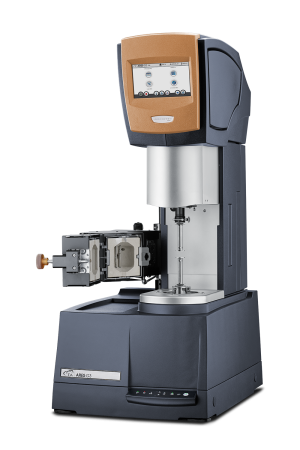
The new TA Instruments | Waters Discovery Hybrid Rheometer delivers superior performance, ease of use and versatility. Whether rheological measurements require controlled stress, strain or rate; steady shear or oscillation; rotational, tensile, compressive or extensional deformation; the DHR is the instrument of choice across leading labs around the world.
High Temperature Viscometer
2 productshttps://www.youtube.com/watch?v=JSk7yeRpEDU
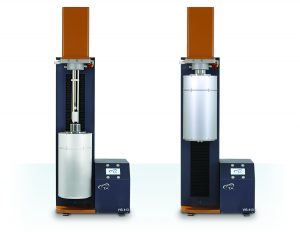
Rotational viscometry is used to determine the viscosity of a liquid by measuring the torque required to rotate a cylindrical bob immersed in the liquid sample material. A higher viscosity of the sample will result in a greater torque required to maintain a set rotation rate. Unlike several other rheological measurement techniques, this method can be combined well with a high-temperature furnace to measure the viscosity of many molten materials from the highest temperatures to the point of solidification.
Dynamic Mechanical Analyzers (DMA)
3 productshttps://www.youtube.com/watch?v=egR8QpDcZOg
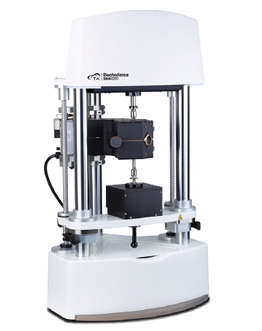
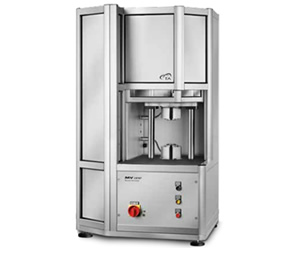
Dynamic Mechanical Analyzers (DMA) measure the mechanical properties of materials as a function of time, temperature, and frequency. In addition to quantifying viscoelastic properties of materials, DMA can also quantify finished component and product characteristics, reflecting the important contribution that processing has on end-use product performance. DMA is commonly used to measure glass transition temperatures (Tg) and secondary transitions, orientation caused by processing, cold crystallization, cure optimization, filler effects in composites, and much more. DMA provides an accurate measure of material modulus and product stiffness plus other important mechanical properties such as damping, creep, and stress relaxation. A Dynamic Mechanical Analyzer is a mechanical instrument that applies specific displacement or force to a sample and very accurately quantifies its force versus displacement response. Its measurements extend beyond simply quantifying the magnitude of force divided by the displacement magnitude; it accurately calculates the phase relationship between the signals. This enables a DMA instrument to quantify the elastic (spring-like) versus viscous (fluid-like) components of the sample response which is crucial for reliable and complete viscoelastic property characterization such as Storage Modulus, Loss Modulus, and Tan delta. These viscoelastic properties are almost always evaluated over a range of temperatures, using oven and cooling accessories, which then can provide many insights into structure-property relationships and how materials perform at different use temperatures. Some advanced methods include TTS (Time-Temperature Superposition), curing studies, creep-recovery, and stress-relaxation analysis.